AIR DEFENSE

Early warning RF detection capability

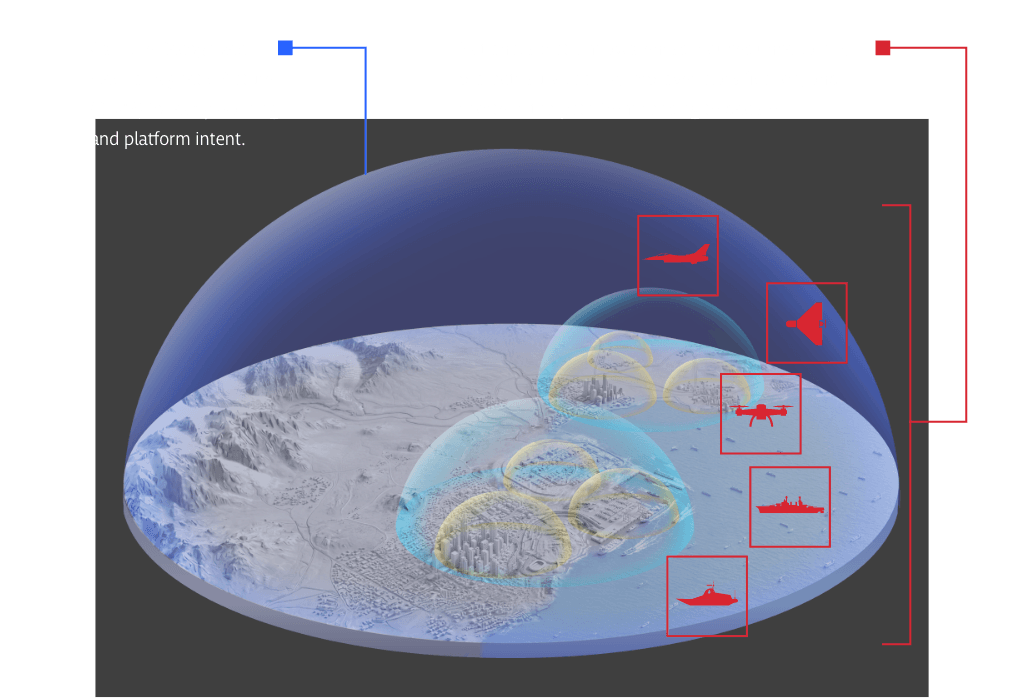
Modern air defense depends on detecting threats as early as possible, without revealing your own position. Passive RF sensors deliver that capability.

Operating silently, they detect and geolocate hostile emitters in real time, allowing air defenders to maintain EMCON, gain valuable decision time, and cue other sensors or weapon systems for precise targeting.

Passive RF technology augments traditional radar systems—which are effective but exposed—by adding persistent, rapidly deployable sensors that deliver full Electronic Support Measures (ESM) capability. Aligned with the ‘mix, mass, modularity’ principles of modern IAMD, these sensors enable defenses that are flexible, scalable, and reconfigurable.

CRFS sensor networks seamlessly integrate into layered defense architectures—from Forward Operating Bases to strategic infrastructure—delivering real-time RF intelligence. The TRL‑9 technology fills a critical gap in an integrated air defense ‘Find, Fix, Track, Target, Engage, Assess (F2T2EA)’ process.
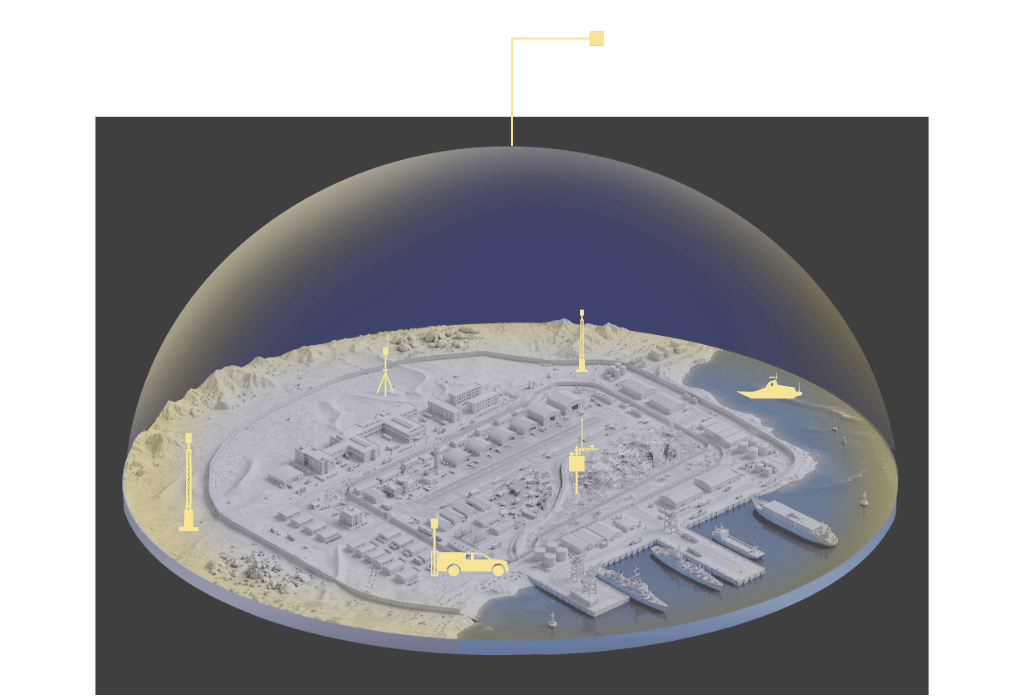
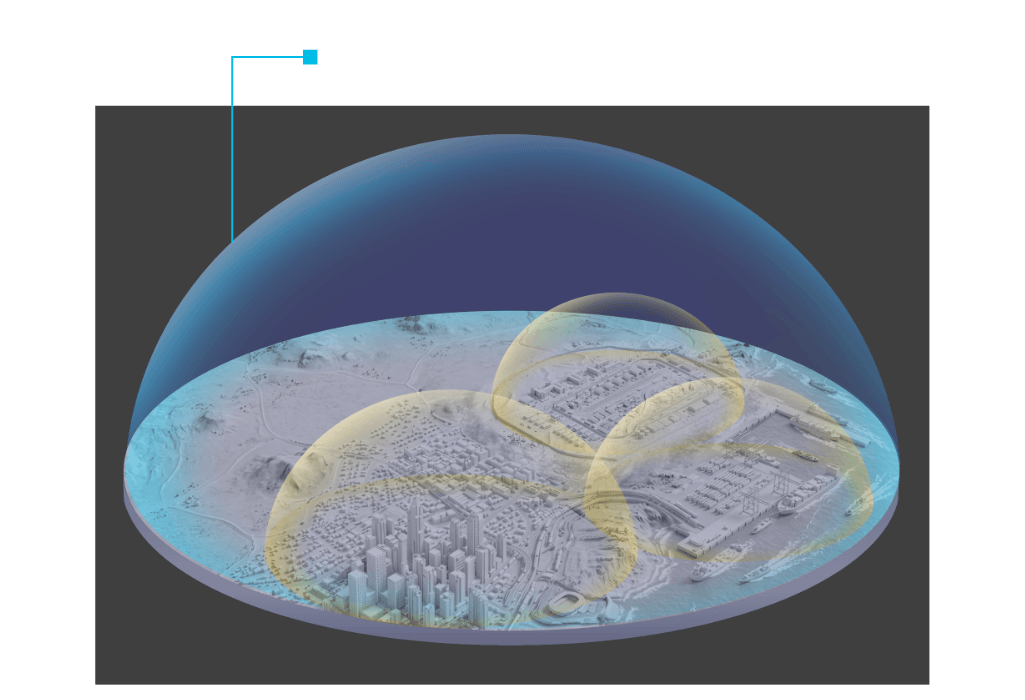
Passive RF sensing for IAMD

SHORT RANGE AIR DEFENSE

Critical infrastructure

RFeye Short

MID RANGE AIR DEFENSE

Regional infrastructure

RFeye Mid

LONG RANGE AIR DEFENSE

National REMP

RFeye Long

Air defense applications

icon radar augmentation drk

Radar augmentation

A passive RF sensor network complements radar by acting as an early warning system, detecting hostile airborne targets without alerting the enemy and cuing targeting radar.

icon signal interest drk

Detect the signal of interest, not the platform

Custom built signal detectors search for specific signals (including telemetry, video links, payload data transfer) rather than for specific platforms.

icon geolocation drk

Highly accurate 3D TDoA geolocation

Time Difference of Arrival accurately geolocates the position of RF emitters in three dimensions by analyzing the time difference between each sensor and using advanced algorithms.

Icon wideband frequency drk

Operate in GNSS-denied environments

CRFS has several tools to continue spectrum monitoring and geolocation missions in GNSS-denied environments.

icon sensor drk

Operating under EMCON

Passive RF sensors allow air defenders to operate under EMCON as they can listen without emitting, increasing survivability and helping to monitor blue force comms.

icon interoperability drk

Interoperability

Through open API architecture, you can use CRFS’ spectrum monitoring and geolocation capabilities in your C2 system.

Bridge the kill chain gap


Accelerate the F2T2EA process with real-time 3D geolocation that feeds directly into your C2 architecture.

CUSTOMER SUCCESS

“We’re moving beyond traditional spectrum analysis—CRFS’ tools allow us to explore the spectrum at a level we couldn’t reach before.”

Chris Sanford

CUSTOMER SUCCESS

The template is really nice and offers quite a large set of options. It's beautiful and the coding is done quickly and seamlessly. Thank you!

Chris Sanford

CUSTOMER SUCCESS

The template is really nice and offers quite a large set of options. It's beautiful and the coding is done quickly and seamlessly. Thank you!

Chris Sanford
GU-RFEYE-002 Early warning RF detection for IAMD Cover

GUIDE

Early warning RF detection for IAMD

Modern air defense depends on detecting threats as early as possible, without revealing your own position. Passive RF sensors deliver that capability.

WP-RFEYE-032 Passive Geolocation with 3D Cover

WHITE PAPER

Passive Geolocation with 3D TDoA

Time Difference of Arrival (TDoA) techniques determine the source location of RF signals by analyzing variations in their travel time. 3D TDoA calculates a signal’s altitude, latitude, and longitude.

Get instant news & expert insights

Join thousands of professionals who subscribe for exclusive insights and early access to our reports and analysis.