As one of the world’s most vibrant and diverse countries, Brazil is the natural host for large inter-national sporting, government, and cultural events.
However, major international summits represent some of the highest risk environments for radiofrequency operations. Tens of thousands of visiting delegations, heads of state, global media organisations, emergency services, aviation operators, and temporary wireless systems converge into dense urban areas, creating a fragile and sensitive RF environment.
In November 2025, Brazil hosted the 30th Conference of the Parties (COP30) to the United Nations Framework Convention on Climate Change (UNFCCC) in Belém, bringing together representatives from 190 countries and over 500,000 visitors within a highly concentrated urban and airport environment around the size of 100 football fields.
For Anatel (Agência Nacional de Telecomunicações), Brazil’s federal telecommunications regulator, the mission was to enable connectivity and ensure that the emergency services, aviation, broadcasters, and GNSS, could operate without interference, unauthorised transmissions, and deliberate jamming.

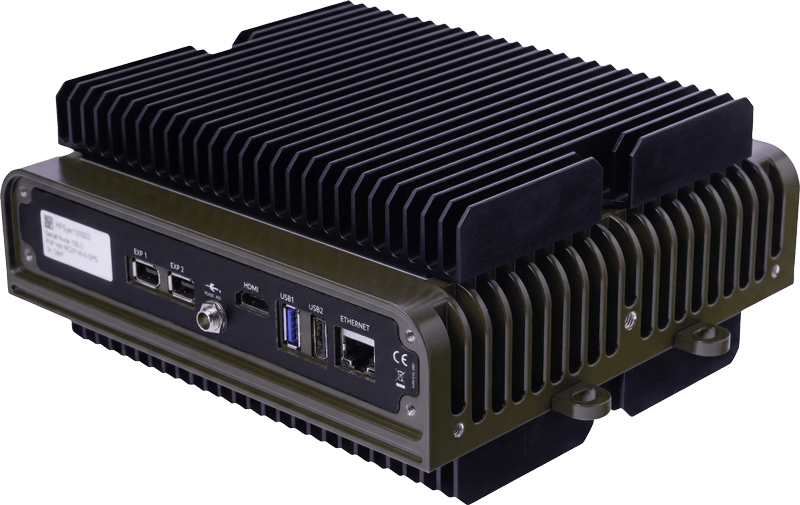
Anatel deployed a network of RFeye Nodes across the Belém metropolitan and airport to conduct continuous spectrum monitoring throughout COP30 2025. High temperatures, humidity, and rainfall in Belém required the highly specialized equipment for this mission to be robust and resilient.
The Anatel task force was divided into three main groups: the real-time spectrum monitoring team, the field team responsible for interference hunting, and local support to the service providers. This combined robust command and control with rapid tactical response.
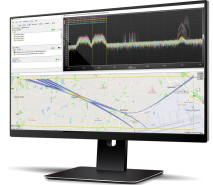
Daniel Ferreira, who coordinated the spectrum team, created a mobile application that coordinated the operation between all the teams. Once a spurious emission was detected and geolocated by RFeye Site, the information was promptly forwarded to the field team, supporting rapid deployment to locate and address interference or jamming.
Using a permanent network of highly sensitive RF sensors and geolocation software allowed Anatel to rapidly detect and address anomalous emissions across one of the world’s most complex RF environments.
Over the course of the event, the regulator analysed 416 emissions across cellular, GNSS, land mobile radio, broadcast television, and professional wireless microphone bands, enabling rapid identification of anomalous or potentially disruptive transmissions.
All detected anomalies were geolocated, assessed, and resolved before they could degrade public safety, aviation, broadcast, or emergency service communications. The deployment enabled Anatel to operate proactive and persistent monitoring rather than a reactive enforcement model. This allowed uninterrupted services, safeguarded critical communications, and enforced regulatory compliance in real time.
These outcomes demonstrate Anatel’s ability to execute sovereign-grade spectrum security operations at scale, even within dense, temporary, and high-risk RF environments.
The Anatel team were able to ensure the success of the event in a dense, high-risk RF environment thanks to three key factors:
With remote teams operating from Brasília to Belém, Anatel maintains a nationwide network of more than 100 RFeye Nodes, providing country-wide monitoring.
Building on a proven track record of successful deployments during nationally significant events — including the Olympics, World Cup, and COP30 — Anatel continues to expand this monitoring architecture through ongoing cooperation with CRFS.